
Prefab House Prices 2026
Updated: 6 July 2026 · Aktaş Prefabrik Ev
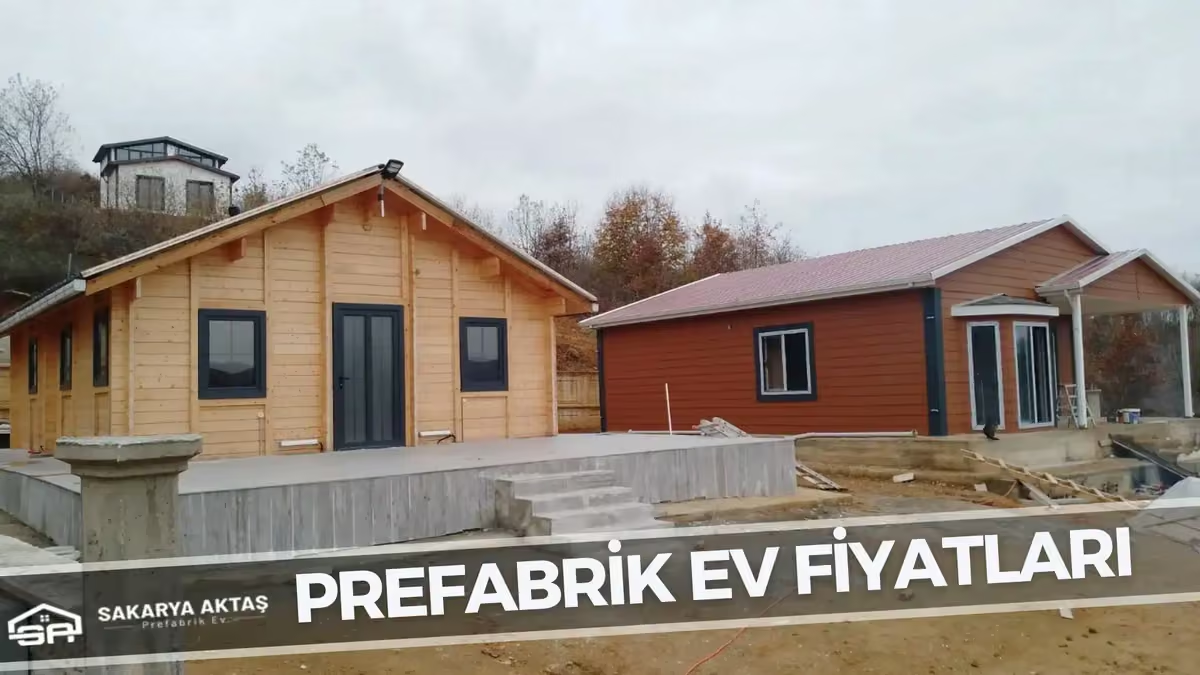
2026 prefab house price list
The amounts below are the list prices from the model pages; assembly, installations, paint and windows are included. Foundation, transport and crane are stated separately in the written quote, depending on the plot.
Steel-frame house models
For steel-frame houses the price is calculated based on the plot and project; plan drawings are on the model pages.
| Model | m² | Room | Storeys | List price |
|---|---|---|---|---|
| Steel-frame house, 95 m² | 95 | — | 2 | Problem |
| Steel-frame house, 104 m² | 104 | — | 2 | Problem |
| Steel-frame house, 120 m² | 120 | — | 2 | Problem |
| Steel-frame house, 139 m² | 139 | — | 2 | Problem |
| Steel-frame house, 140 m² | 140 | — | 2 | Problem |
| Steel-frame house, 143 m² | 143 | — | 2 | Problem |
| Steel-frame house, 146 m² | 146 | — | 2 | Problem |
| Steel-frame house, 159 m² | 159 | — | 2 | Problem |
| Steel-frame house, 170 m² | 170 | — | 2 | Problem |
| Steel-frame house, 174 m² | 174 | — | 2 | Problem |
| Steel-frame house, 176 m² | 176 | — | 2 | Problem |
| Steel-frame house, 189 m² | 189 | — | 2 | Problem |
| Steel-frame house, 194 m² | 194 | — | 2 | Problem |
| Steel-frame house, 207 m² | 207 | — | 2 | Problem |
| Steel-frame house, 220 m² | 220 | — | 2 | Problem |
| Steel-frame house, 232 m² | 232 | — | 2 | Problem |
| Steel-frame house, 233 m² | 233 | — | 2 | Problem |
Prefab house prices are among the most searched topics as we enter 2026. Offering economical, quick-to-build structures suited to modern living, prefab houses, have become an attractive housing alternative for both private buyers and investors. Varying price ranges, the wide choice of models and the quality of materials used make careful research more important than ever.
Aktaş Prefabrik offers clear, up-to-date pricing for 2026 across a wide range, from single-storey models to two-storey buildings and steel-frame house options. In this guide you will take a detailed look at what to watch for when buying a prefab house, how prices change per square metre, and the long-term cost advantages.
Having the right information matters when you are working towards your dream home. So let's explore 2026 prefab house prices from every angle.
How Much Do Prefab Houses Cost in 2026?
2026 prefab house prices vary by model type, floor area and materials used. According to the latest figures, the single-storey and two-storey models offered by Aktaş Prefabrik cover a wide range of living space from 40 m² to 166 m². In this year's pricing, the strength of steel load-bearing systems, insulation performance and architectural customisation play a decisive role.
Single-storey prefab house prices start from 483,700 TL and rise to 1,282,900 TL for 4+1 models suited to large families. Two-storey prefab house prices, meanwhile, start from 997,800 TL and can go up to 1,638,771TL. This way, Aktaş Prefabrik Ev offers versatile options both for those looking for economical solutions and for those who want spacious, comfortable living space.
In this guide you will find the exact 2026 prices of all models, square-metre comparisons and advantages that will help you plan your budget.
Single-Storey Prefab House Prices (Current 2026 List)
The single-storey prefab houses offered by Aktaş Prefabrik come in a very wide range of models from 40 m² to 166 m². The current prices of all single-storey models are listed below:
Single-Storey Prefab House Price List 2026
Most affordable single-storey model: 1+1 40 m² – 483,700 TL
Largest single-storey model: 4+1 166 m² – 1,282,900 TL


Two-Storey Prefab House Prices (80 m² – 158 m²)
Two-storey prefab houses are an ideal solution for large families, people looking for a home for both summer and winter, and anyone who wants a lot of living space.
Below are the 2026 prices of all two-storey models:
Two-Storey Prefab House Price List 2026
Most affordable two-storey model: 2+1 82 m² – 997,800TL
Largest two-storey model: 4+1 158 m² – 1,638,771TL


2026 Prefab House Prices per Square Metre (Current List)
The table below shows the price/m² comparison of Aktaş Prefabrik models in 2026:
Price / m² Comparison
The calculations below are average ranges intended only to give you a rough idea per m².
Single-storey models:
Approx. 7,700 – 12,400 TL / m²
Two-storey models:
Approx. 10,400 – 12,200 TL / m²
Quick note:
- Smaller models naturally have a higher price per m²
- Larger floor areas lower the cost per m²
- Plan type, number of rooms and number of storeys have a direct effect
These ranges
may vary depending on material quality, steel frame thickness, insulation choices and architectural customisation.
Factors That Determine Prefab House Prices
In 2026, prefab house prices vary considerably depending on model type, floor area, materials used and project details. In particular, the thickness of the steel load-bearing structure, the quality of the insulation materials and architectural customisation are among the technical factors that directly affect the price. In addition, extra steps such as assembly, transport and the concrete base are also decisive in the total cost.
A well-planned prefab house becomes an investment that is both economical and energy-saving in the long run. That is why understanding the factors that determine price is so important for budget planning.
Floor Area and Number of Rooms
The most fundamental factor in prefab house prices is floor area. As the building gets larger, both the amount of material and the labour time increase, so costs rise. For example, the significant price difference between a 40 m² house and a 166 m² house among Aktaş Prefabrik's models is a natural result of this.
The number of rooms is also a key factor affecting price. More rooms mean more wall panels, doors, windows, electrical lines and plumbing. This raises the total cost.
Choosing the right floor area directly affects both your budget and your comfort.
For comfortable living, it is important to consider not just the size of the space but also its functional use.
Quality of Materials Used (Steel – Insulation – Cladding)
Material quality is the most critical price factor in prefab houses, in terms of both safety and durability.
Steel Load-Bearing System
- Provides durability and earthquake safety.
- Thicker steel profiles increase the price but make the structure much safer.
Heat & Sound Insulation
- Improves energy efficiency and lowers bills.
- High-performance insulation such as rock wool or EPS raises the price but saves money in the long run.
Exterior Cladding Materials
- Provides an attractive look and resistance to the weather.
- Options such as composite, wood-look cladding or fibre cement can change the cost.
Quality materials = long life + low maintenance costs + high durability.
Wall – Roof – Floor Systems
Wall panels largely determine insulation performance in prefab systems. As density and panel thickness change, so does the cost.
Roof systems are very important for waterproofing, heat protection and durability.
- Sandwich panel roof
- Shingle roofing
- Trapezoidal sheet metal
and other options can cause prices to vary.
Floor systems also determine both the comfort and the solidity of the building.
- Wooden floor (more economical)
- Concrete floor (more durable)
are chosen according to need and affect the total cost.
Project Customisation and Extra Features
When buying a prefab house, many people ask for customisation to suit their needs. These changes can raise the price but also significantly improve quality of life.
Customisation items that affect the price:
- Extra room or storage space
- Open/covered terrace, balcony additions
- Smart home systems
- Solar panels
- Upgraded doors and windows
- Interior design changes
Customisation means comfort tailored entirely to you.
These additions increase the long-term use value of the house.
Assembly, Transport and Concrete Base Costs
The assembly process for prefab houses is fast, but because it must be carried out by a technical team, an assembly fee is added to the cost. The size of the building and the number of storeys determine the assembly cost.
Transport costs vary depending on where the house will be built.
- Transport within the city costs less
- Remote areas may incur higher transport costs
In addition, a concrete base must be prepared before the house is installed. This is also one of the cost items and may vary with local labour rates.
Prefab or Reinforced Concrete House? 2026 Price Comparison
In 2026, despite rapidly rising construction costs, prefab house prices still stand out as one of the most affordable housing options. Because the modular parts produced in the factory are assembled quickly on site, costs per square metre remain far more favourable than for reinforced concrete buildings. Short delivery times, low labour costs and energy efficiency also strengthen the case for choosing these buildings.
Reinforced concrete houses offer important advantages in durability and lifespan, but due to high labour costs, long construction times and rising material expenses, their 2026 costs are markedly higher than those of prefab buildings. Long-term maintenance expenses for reinforced concrete buildings are also a significant additional cost to consider.
Both types of building have their strengths. When choosing, however, needs, budget, regional climate and intended use should be weighed together.
Cost Analysis per Square Metre
The cost per square metre of prefab houses is one of the most critical factors in buyers' decisions. The larger the model, the more material and labour are needed, so the total cost rises.
- For example, a 40 m² prefab house requires less material and a shorter assembly time,
- whereas in a 166 m² model the cost rises because both the length of the steel load-bearing structure and the amount of panelling increase.
Key factors affecting the cost per square metre:
- Thickness of the steel profiles used
- Quality of the insulation materials
- Type of cladding material
- Number of windows and doors and their material grade
- Architectural complexity
High-quality insulation raises the price per square metre but saves significantly on energy costs in the long run.
Local construction market conditions, labour costs and regional demand also have a direct effect on prices per square metre.
Maintenance and Long-Term Running Costs
Maintenance costs for prefab houses are much lower than for reinforced concrete buildings, but they do need regular checks. Inspecting the roof and exterior wall panels once a year is especially important to catch possible water leaks early.
Things to keep an eye on in the long term:
- Performance of the insulation materials
- Effects of sun and rain on the roof surface
- Durability of the exterior cladding
- Wear on interior floor and wall surfaces
Inadequate insulation can lead to higher energy bills in the long run. That is why choosing quality materials is the most important way to keep maintenance costs down.
Construction Time and Operational Advantages
Prefab houses are delivered much faster than reinforced concrete buildings because production and assembly are fully controlled.
- Production takes place in the factory → weather does not affect the process.
- On-site assembly is usually completed within a few days to a few weeks.
- Labour costs are low and the process is more predictable to manage.
These operational advantages make prefab houses an ideal, time-saving option, especially for people who need housing urgently.
Energy efficiency and the use of sustainable materials further strengthen the long-term total cost advantage of prefab houses.
What to Watch For When Buying a Prefab House
When buying a prefab house in 2026, pay particular attention to the following criteria:
- Certified materials
- Compliance of the production facility with quality standards
- Zoning status of the plot and building permit requirements
- Accurate analysis of regional climate conditions
- The company's industry experience and warranty processes
These factors affect the total cost and determine the long-term performance of the building.
Material Certificates and Production Standards
Material certificates are the guarantee of safety and durability in prefab houses. When core components such as steel, cladding and insulation meet international standards, the building is more resistant to earthquakes, wind and external influences.
Production standards also reveal a company's professionalism. Panels and steel constructions produced in ISO-certified facilities are safer and keep the margin for error during assembly to a minimum.
Zoning Status and Building Permit Requirements
Before buying a prefab house, always check the zoning status of the plot. Every municipality has its own rules, and prefab buildings are subject to them too.
- The plot is zoned for residential use
- Municipal building permit requirements are met
- The necessary plans are prepared
Completing these steps fully ensures that the house can be built legally and without problems.
Regional Climate and Choice of Insulation
The climate where the prefab house is located directly affects insulation choices and building design.
- In cold regions: thick wall panels, high-density insulation
- In hot regions: designs that allow airflow, sun-shading materials
- In rainy regions: durable roofing and waterproofing
When these details are chosen correctly, you save energy and indoor comfort improves.
Company Reliability and Warranty Processes
One of the most critical issues when buying a prefab house is the reliability of the company you work with. Companies that have been in the industry for a long time, have strong reference projects and provide after-sales service are always the better choice.
- Long warranty period
- Spare parts and service support
- Technical follow-up after assembly
- Clear and transparent pricing policy
These factors both preserve the value of the building and give the owner a trouble-free experience.
Aktaş Prefabrik Price Advantages and Models
Aktaş Prefabrik stands out for 2026 with its wide range of models and price advantages. With single-storey and two-storey prefab house options for different needs, it caters to every budget. By putting quality first, it strengthens trust with certified materials.
In addition, projects that can be customised with original designs make it possible to create your dream home. The professional Aktaş Prefabrik team carries out assembly quickly, saving you time. Now is the perfect time to own a high-quality prefab house at an affordable price!
Prefab House Prices: Frequently Asked Questions
How much do prefab houses cost in 2026?
As of 2026, prefab house prices start from 483,700TL and go up to 1,638,771TL. All current single-storey and two-storey prefab house prices are offered by Aktaş Prefabrik Ev.
Does it make sense to buy a prefab house?
Given rising construction costs in 2026, prefab houses are one of the most sensible housing options thanks to their low budget, quick installation and energy savings.
How much does a two-storey prefab house cost?
As of 2026, two-storey prefab house prices start from 997,800TL and rise to 1,638,771TL depending on model size. Thanks to their spacious floor plans, two-storey prefab houses are among the categories most preferred by large families.
How does cost change as floor area increases in a prefab house?
As the area grows, the amount of steel, number of panels and labour increase, so the price rises. That is why choosing the right m² is critical for budget planning.
Address
54160 Söğütlü / Sakarya, Türkiye
Phone and Email
Mobile Lines
+90 (536) 719 65 95
+90 (536) 716 65 95